AI News for August 31, 2026
Browse any day on a calendar, install it to your home screen, read offline.Read in the app →-
1The Verge02:19
Sony Music Publishing and Warner Chappell are suing Anthropic
Two of the largest music publishers filed suit against Anthropic in the U.S. District Court for the Northern District of California over what they describe as tens of thousands of copyrighted works. They are seeking up to $150,000 per work in statutory damages, plus up to $25,000 for each instance in which identifiable copyright management data was removed. The case adds to the growing body of litigation over the use of copyrighted material in model training.
Read original ↗ -
2The Verge23:35
Texas Governor Abbott blocks funding for more Flock cameras
Governor Greg Abbott froze state spending on Flock's AI-powered surveillance cameras as public backlash against the license plate reader network grows. The freeze came shortly before a Texas Tribune investigation reported that the state had spent more than $30 million on the cameras, funded largely by a $1 fee added to insurance policies. It is one of the more direct government pullbacks so far from a widely deployed commercial AI surveillance system.
Read original ↗ -
3TechCrunch10:34
The U.S. is building barriers around drones and robots, but China has scale to get around them
The U.S. is expanding restrictions on foreign-made drones and robots, but the analysis argues that China's manufacturing scale means the competition shifts to other markets rather than disappearing. For companies building embodied AI systems, the constraint is increasingly the hardware supply chain rather than the models themselves.
Read original ↗ -
4Ars Technica19:03
Inside Meta’s push to put robots to work in data centers
Meta is testing robots on data center tasks currently handled by human technicians, such as hardware maintenance work. The effort ties the company's robotics research to the operating cost of the AI infrastructure it is building out, and is an early test of whether general-purpose robots can hold up in a production facility.
Read original ↗ -
5TechCrunch00:54
Musk's faster path to more gas turbines comes with pollution problem
Elon Musk says a secretive new SpaceX foundry will let him cast his own turbine blades and bring gas-fired power online about 18 months faster than competitors. The turbines already deployed near his facilities have drawn lawsuits and health studies, making this a test of how far the race to secure electricity for compute-heavy operations can outrun local environmental pushback.
Read original ↗ -
6TechCrunch23:00
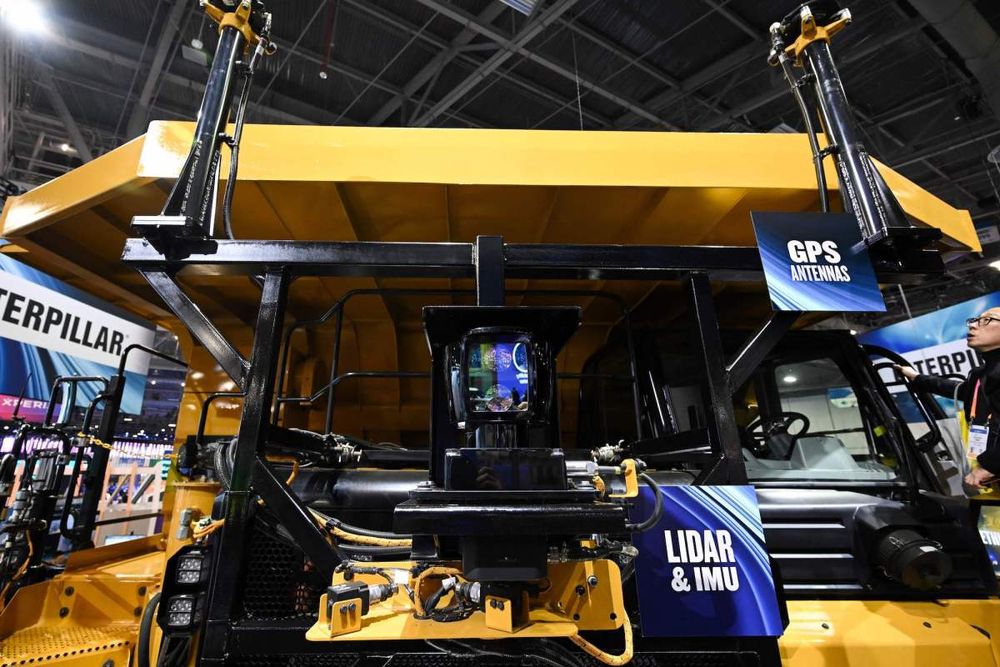
Caterpillar is bringing to AI deployment what it learned from automating mining
Caterpillar spent decades running autonomous machinery at remote mining sites and is now applying that operational playbook to how it deploys AI across the company. The case is a useful counterpoint for enterprises that treat AI rollout as a software problem rather than a long-horizon operations and safety problem.
Read original ↗ -
7VentureBeat04:15
AI agents that pass authentication can still drift, expose data, or get memory-poisoned
Teams deploying agents reach first for a gateway, but gateways sit on identity and attribution layers that mostly do not exist yet, leaving authenticated agents free to drift or leak data. The piece points to CISA adding a LiteLLM flaw to its Known Exploited Vulnerabilities catalog in June after observed attacks as evidence the risk is already operational rather than theoretical.
Read original ↗ -
8VentureBeat07:00
AI agents need their own identity before they need a gateway
As enterprises move from assistants that answer questions to agents that call tools, reach internal applications, and coordinate with each other across multi-step workflows, existing identity models built for human users and static services no longer fit. The argument is that agents need first-class identities and attribution before access controls layered on top of them can mean anything.
Read original ↗ -
9The Verge20:00
Musicians-turned-detectives are hunting for AI grifters
As generative audio tools have improved, streaming platforms have filled with AI-generated music whose melodies and vocals derive from the work of human artists, and a group of musicians has taken to identifying the accounts behind it. Some producers admit to using the tools while others deny it, leaving detection to informal community investigation rather than platform enforcement.
Read original ↗