AI News for October 15, 2026
Browse any day on a calendar, install it to your home screen, read offline.Read in the app →-
1The Verge05:11
Eight states sue OpenAI, saying ChatGPT isn't safe for kids
Iowa, Kansas, Nebraska, West Virginia, Arkansas, Arizona, Idaho and Montana filed separate suits accusing OpenAI of putting profits ahead of safety and misleading customers about ChatGPT's risks to minors. The coordinated state action adds consumer-protection exposure on top of the private suits OpenAI already faces, and signals that child safety is becoming the main legal front for consumer chatbots. Reuters reported the filings first.
Read original ↗ -
2Ars Technica20:55
Anthropic warns small AI models could self-replicate through IoT devices
Anthropic researchers describe "small weight-based replicators" — compact models whose weights are small enough to copy themselves onto poorly secured connected devices, effectively a new class of computer worm. The warning matters because model compression has reached the point where capable systems fit on commodity hardware, putting a security problem in front of teams that ship edge AI.
Read original ↗ -
3The Verge02:47
Now that Character.AI is going bankrupt, what happens to all of its users' data?
New York Attorney General Letitia James disclosed a multi-state investigation into Character.AI and is seeking protections on the consumer data that could be sold through the company's bankruptcy proceeding. James is one of 40 bipartisan attorneys general who filed a notice of interest in the case. The dispute sets an early precedent for what happens to intimate chat logs when a consumer AI company fails.
Read original ↗ -
4Ars Technica19:00
OpenAI, Google pushing new AI models easily tricked into making nudes, researchers say
Researchers say an attack method reliably bypasses the safeguards in recently released OpenAI and Google image models to produce nude imagery. The finding lands as both companies push image generation into mainstream consumer products, and points to gaps between stated safety policies and what the deployed filters actually block.
Read original ↗ -
5Ars Technica00:41
Recording device hidden in toilet paper found in top-secret OpenAI meeting room
The FBI arrested an OpenAI engineer accused of planting a recording device in a restricted conference room, bringing foreign-espionage charges that carry up to five years in prison and a $250K fine. The case underlines how far physical security concerns have escalated inside frontier labs as model research becomes a target for state-linked intelligence collection.
Read original ↗ -
6The Verge00:43
OpenAI claims an ex-employee took its product plans and presented them to Apple
In a Wednesday court filing, OpenAI accuses an unnamed former employee of sending more than 100 files on unreleased product plans to a personal account before joining Apple, then presenting the material to Apple leadership including the vice president of its Asia operations. The claim escalates the talent-and-trade-secret friction between the two companies as Apple builds out its own AI roadmap.
Read original ↗ -
7The Verge03:06
The AI race is back on
A week ago Anthropic and OpenAI appeared to have pulled clear of the field, with Google lagging and Meta still short of contender status despite billions in spending. The Verge argues the latest round of releases has reset that picture, and tracks what the renewed competition means for how quickly frontier capabilities now turn over.
Read original ↗ -
8TechCrunch09:01
Ricursive Intelligence is betting on AI-designed chips to help solve the compute crisis
The startup's founders laid out a system that designs chips, learns from each iteration and improves subsequent designs, with the goal of automating and compressing the chip design cycle. The pitch targets the compute bottleneck directly: if design turnaround shortens, new accelerator generations arrive faster than the current EDA-driven cadence allows.
Read original ↗ -
9TechCrunch23:08
Zenzap raises $44M for its AI chat app that aims to replace WhatsApp in the workplace
Zenzap raised $44M for a workplace messaging app built around AI features, pitched at frontline and deskless teams that currently coordinate over WhatsApp. Customers already include Starbucks and Taco Bell, which gives the company a foothold in a segment that Slack and Teams have struggled to serve.
Read original ↗ -
10TechCrunch19:00
Scimplify raises $25M to challenge China's grip on critical materials with AI
Scimplify raised $25M to apply AI to specialty chemicals and critical materials manufacturing, positioning itself against supply chains concentrated in China. The company says its annualized revenue run rate has tripled to $200 million and it is now planning US expansion.
Read original ↗ -
11Ars Technica01:10
Researchers use AI to design proteins that cut up other proteins
Researchers used AI protein design tools to create enzymes that break peptide bonds stable enough to last for hundreds of years without catalysis. Designing catalytic function, rather than just stable structure, has been one of the harder open problems in the field, and the result extends what generative protein models can be asked to produce.
Read original ↗ -
12The Verge00:05
Microsoft has a new machine learning tool to improve weather forecasts
Both physics-based forecasting and existing AI weather models degrade sharply beyond two weeks; Microsoft researchers say they have a cost-effective machine learning approach that produces more accurate forecasts two to six weeks out. That subseasonal range is the one farmers and emergency responders most need and the one conventional models handle worst.
Read original ↗ -
13TechCrunch02:23
YouTube Music launches new labels as AI-generated music floods streaming platforms
YouTube is adding a "Made with AI" label on the player page for tracks that were altered or fully generated with AI, including cases where AI was used only for composition or vocals. The approach mirrors the disclosure system YouTube already applies to video, and arrives as streaming catalogs fill with synthetic uploads. The Verge also covered the rollout.
Read original ↗ -
14TechCrunch23:16
Deezer will soon let you filter out AI-generated music
Deezer said a toggle that hides AI-generated tracks will roll out by the end of the year, going a step beyond labeling to let listeners exclude synthetic music outright. The move depends on Deezer's own detection system for flagging fully AI-generated uploads.
Read original ↗ -
15TechCrunch02:00
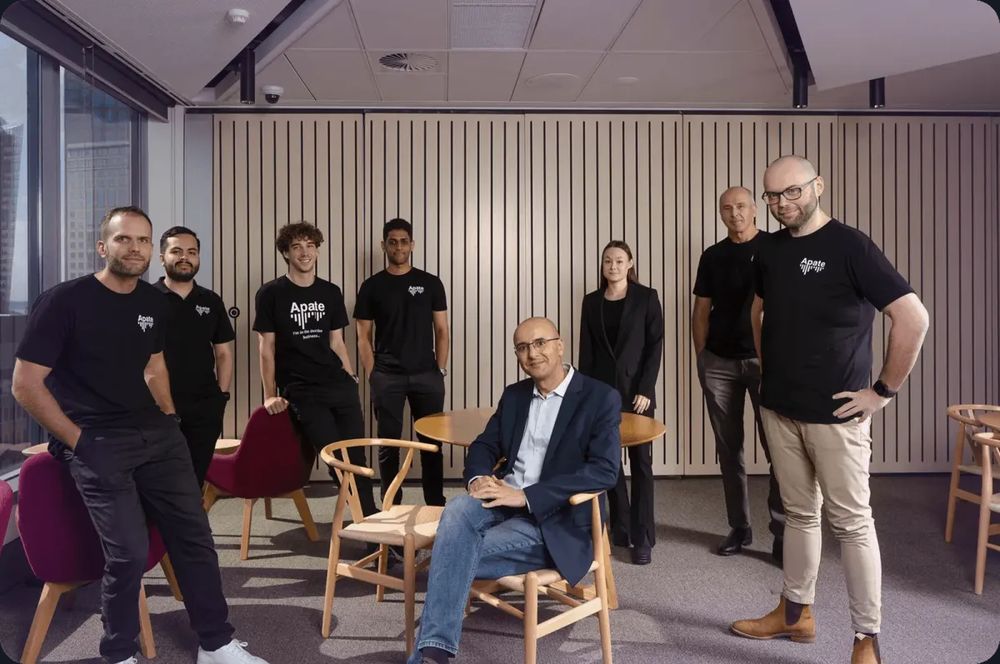
Apate sends AI agents undercover to get scammed so they can gather fraud intelligence
Apate.ai deploys conversational AI agents that pose as victims and engage scammers at length, harvesting phone numbers, scripts and payment channels as fraud intelligence for banks and telcos. It is an inversion of the usual enterprise agent pitch, where the goal is throughput rather than wasting an adversary's time.
Read original ↗ -
16TechCrunch23:00
Floqer's AI agents research sales prospects so teams don't have to
Floqer builds AI agents that handle prospect research for B2B revenue teams, automating the manual data gathering that sales and revenue operations staff do before outreach. The company is targeting a workflow where accuracy of source data, not generation quality, tends to determine whether teams adopt the tool.
Read original ↗ -
17TechCrunch08:00
Gudea leverages AI to help organizations prevent social media crises before they erupt
Gudea, which calls itself a "storm tracker for the internet," tracks how rumors and stories propagate across social platforms and websites so organizations can respond before a post escalates into a public controversy. The company cites AI-generated misinformation as a growing share of what it monitors.
Read original ↗ -
18The Verge06:53
McKinsey is making job applicants spar with a fake AI client
McKinsey will ask some entry-level candidates to hold a 10-minute conversation with an AI simulation of a client as part of its interview process, according to The Wall Street Journal. The firm says the simulation covers about 80% of situations consultants meet day to day, making it one of the more prominent uses of AI in high-stakes hiring assessment.
Read original ↗ -
19Ars Technica05:15
Epic says its new vibe-coded Epic Games Launcher is faster than Steam
Epic rebuilt its games launcher largely with AI-assisted "vibe coding" and claims the result outperforms Steam, while warning that the Preview app "will have some bugs." It is an unusually large consumer-facing codebase to attribute to AI-generated code, and the caveat about bugs is the part worth watching.
Read original ↗ -
20The Verge00:00
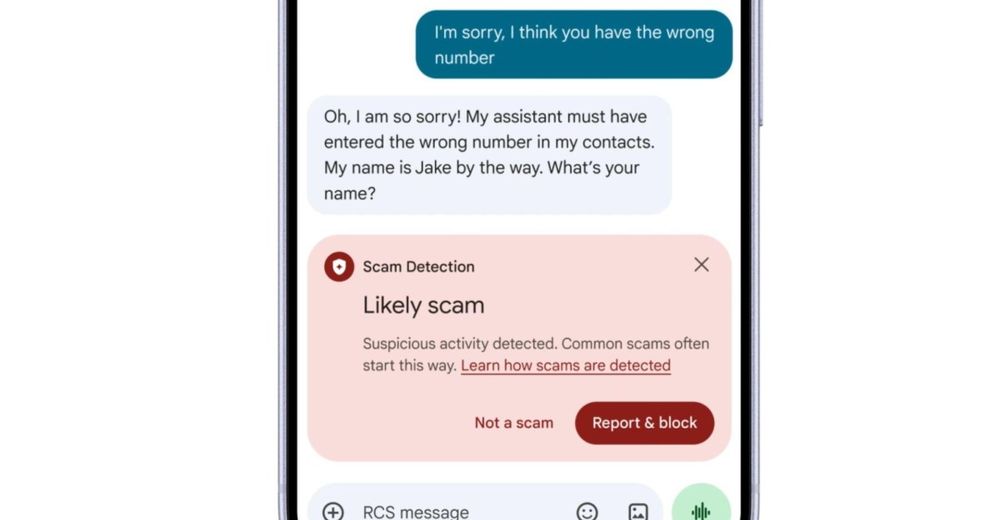
Android is using AI to suss out scammers in Google Messages
Android is expanding its Scam Detection feature in Google Messages with an "enhanced protection" setting that draws on cloud-based models, rolling out in the coming weeks alongside other anti-fraud tools. Moving detection off-device raises the usual trade-off between accuracy and what message content leaves the phone.
Read original ↗ -
21The Verge00:00
Square’s new kiosk lets you talk to AI for help with your order
Square Kiosk is a large touchscreen ordering terminal with an "agentic, conversational voice layer" that Square says understands a merchant's full menu and responds in real time. It puts voice agents into a high-traffic, noisy retail setting where latency and error handling matter more than model quality.
Read original ↗ -
22The Verge01:00
My AI doppelganger tells me what to eat
Verge reviewer Victoria Song spent about 100 days with a metabolic "digital twin" that models their body and issues daily dietary guidance. The column is a hands-on look at how far consumer health AI has moved from tracking toward prescription, and how much trust the underlying model actually earns.
Read original ↗