AI News for November 2, 2026
Browse any day on a calendar, install it to your home screen, read offline.Read in the app →-
1The Verge21:11
Silicon Valley wants you to invest in miracles
Anthropic's IPO filing frames its own technology in extremes, warning that AI could pose catastrophic or existential risks to humanity while also promising an age of miracles. The language puts public-market investors in the unusual position of pricing a company whose own disclosures treat both outcomes as live possibilities. How regulators and institutional buyers react to that framing will matter for every AI company that follows it to the public markets.
Read original ↗ -
2The Verge04:26
The biggest names in AI are backing a new way to opt out of scraping
OpenAI, Google, Microsoft, and Anthropic say they will adopt a shared standard that lets publishers signal AI training preferences once instead of configuring each crawler separately. The mechanism uses a common policy token that participating companies agree to honor. Broad adoption by the largest model developers gives the signal practical weight that earlier opt-out proposals lacked.
Read original ↗ -
3The Verge02:21
Google's satellite AI server transmits its first response to Earth
Google says it booted the TPUs aboard its Project Suncatcher satellite and ran an on-board Gemma 4 model, which generated a haiku in response to a prompt and transmitted it back to Earth. It is a small workload, but it demonstrates that accelerator hardware and a model can run and return results from orbit. Google is pitching space-based compute as a long-term answer to the power and siting limits facing terrestrial data centers.
Read original ↗ -
4Ars Technica05:09
Anthropic VS code extension on Cursor backdoored for nearly 12 hours
A backdoored build of Anthropic's extension was distributed through Cursor's marketplace for close to 12 hours before being pulled, served from what appeared to be Anthropic's verified publisher account. How the attackers obtained access to that account has not been established. The incident puts the distribution channels for AI coding tools, which run with broad access to developer machines and repositories, under direct scrutiny.
Read original ↗ -
5The Verge06:32
Apple Intelligence is finally coming to China with iOS 27.3
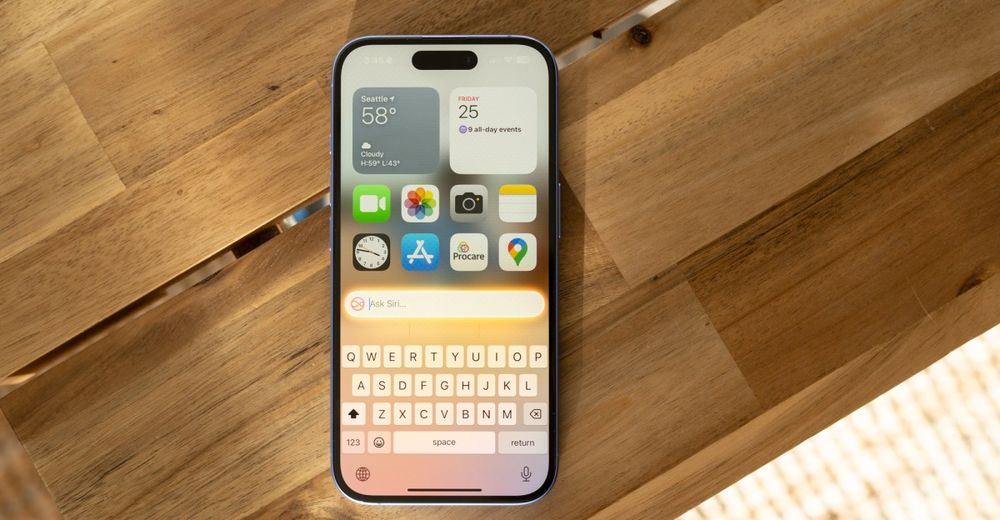
Apple announced on its Chinese newsroom site that Apple Intelligence will reach China with iOS 27.3, starting with a beta on November 4th and a full release in December. The rollout follows an extended regulatory and partnership process that kept the features out of Apple's second-largest market. Not all Apple Intelligence capabilities are included in the China version.
Read original ↗ -
6The Verge19:00
Maine’s data center revolt will decide who controls the Senate
Opposition to AI data centers has become a live issue in Maine's Senate race, with voters confronting incumbent Susan Collins over the climate and water impacts of new build-outs. The contest is close enough that the data center backlash could help determine control of the chamber. Local permitting resistance is becoming a material constraint on where AI capacity can actually be sited.
Read original ↗ -
7TechCrunch05:55
OpenAI might rebrand its data centers as ‘AI compute campuses’
OpenAI is considering describing its data center sites as "AI compute campuses," a wording shift aimed at the growing local hostility toward such projects. The company's build-out depends on securing power and permits from communities that increasingly oppose new facilities. The move underscores how much siting politics now shapes AI infrastructure planning.
Read original ↗ -
8The Verge21:01
Sam Altman sympathizes with mathematicians, but says OpenAI’s math onslaught won’t stop
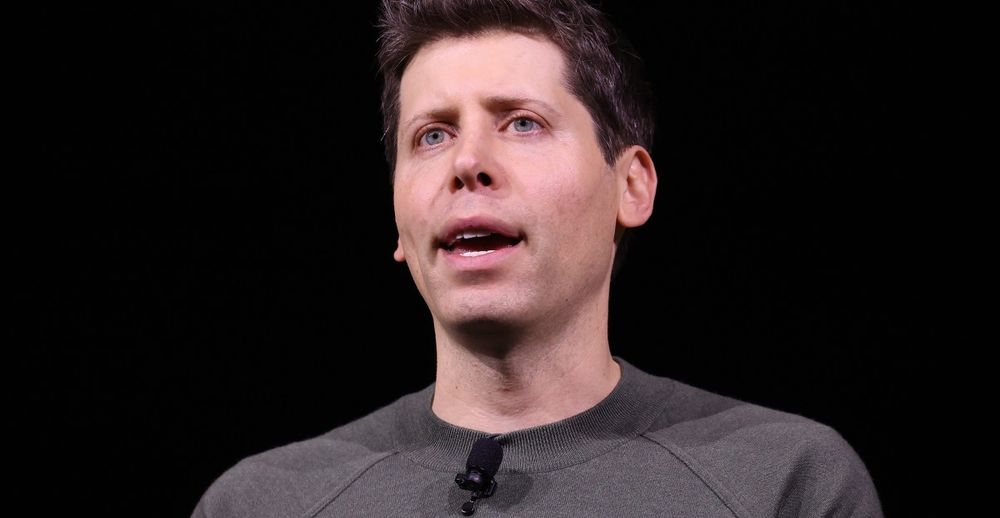
In a podcast interview, OpenAI CEO Sam Altman acknowledged that mathematicians are struggling to keep up with the volume of AI-generated results the company has been publishing, but said he does not plan to slow down. He hinted that OpenAI is holding back further discoveries that have yet to be released. The pace is forcing the mathematics community to confront questions about verification and credit for machine-produced proofs.
Read original ↗ -
9The Verge22:58
Pope Leo calls for the disarmament of AI: ‘Machines are tools, not persons’
Pope Leo XIV called for AI systems to be "disarmed" and urged United Nations member states to take concrete steps toward banning lethal autonomous weapons at next month's meeting in Geneva. He argued that humans retain responsibility to guide, change, and reject AI applications. The address adds institutional weight to the campaign for a binding treaty on autonomous weapons.
Read original ↗ -
10Ars Technica00:53
Thousands of “ghost students” use AI to steal millions in student loans, DOJ says
The Justice Department says thousands of fraudulent enrollments used AI to complete coursework and pass eligibility checks, siphoning millions of dollars in federal student loans. The crackdown is expected to tighten verification in the FAFSA process for legitimate applicants. It is one of the clearest documented cases of generative AI being used at scale to defeat institutional identity and completion checks.
Read original ↗ -
11Ars Technica01:38
Fujifilm to boost tape production 5x as AI fuels archiving demand
Fujifilm plans to increase magnetic tape production fivefold as AI workloads drive demand for cheap, offline long-term storage of training corpora and model artifacts. Tape remains attractive for cost per terabyte and for being air-gapped by default. The expansion is a reminder that the AI build-out is pulling on storage tiers well below the GPU layer.
Read original ↗ -
12The Verge04:48
Sam Altman says it’s better for RAM to be in a data center than on your desk
Asked about the ongoing RAM shortage, OpenAI CEO Sam Altman said it is "terrible" to have memory sitting in personal PCs rather than in data centers where it can be pooled and utilized continuously. The remark lands as AI buildouts squeeze memory supply and raise prices for consumer and enterprise buyers alike. It makes explicit the allocation conflict between AI infrastructure and the rest of the computing market.
Read original ↗ -
13Ars Technica03:30
Basically no one is using AI agents for their DoorDash orders
DoorDash says third-party AI agents have generated only hundreds of orders on its platform so far, a negligible share of its volume. The company characterizes it as early days for agentic commerce rather than a verdict on the approach. The figure is a rare hard number against which to measure claims about agents taking over consumer transactions.
Read original ↗ -
14Ars Technica04:40
Dartmouth's provost warned us about AI cheating—but his own AI use cost him his job
Dartmouth's provost, who had publicly warned about AI-assisted cheating by students, lost his position after his own undisclosed use of AI came to light. The case highlights how institutions are applying disclosure norms unevenly between students and administrators. Universities writing AI policy now face the question of whether the same rules bind the people enforcing them.
Read original ↗ -
15Ars Technica05:41
Supersonic airliner in doubt as company shifts to powering AI data centers
United Airlines' CEO cast doubt on Boom delivering its supersonic airliner by 2029, as the company shifts attention to a business supplying power to AI data centers — a business that has itself just lost a customer. The pivot shows how far the demand for data center electricity is pulling in engineering teams from unrelated industries. It also shows that power contracts are not a guaranteed landing spot.
Read original ↗ -
16The Verge01:38
Starbucks wants to use AI to show you a ‘personalized digital menu’ at the drive-thru
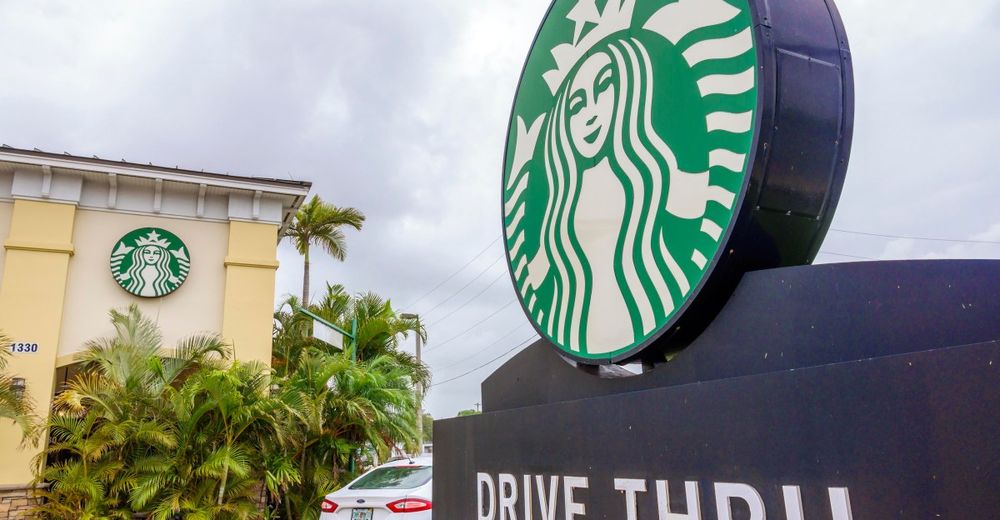
On an earnings call, Starbucks CEO Brian Niccol said the company will explore drive-thru experiences that recognize participating customers on arrival, present personalized digital menus, and streamline payment. The plan depends on linking identity at the lane to order history. It is an example of AI personalization moving into physical retail, with the attendant questions about customer recognition and consent.
Read original ↗ -
17The Verge00:05
I built an AI Tamagotchi before Meta could
A Verge writer used Claude to vibe-code a homemade equivalent of Meta's upcoming Muse Charm, running an expressive AI companion face on cheap Waveshare ESP32 hardware. The build illustrates how far assistive coding has lowered the barrier to hobbyist AI hardware. It also raises the question of what Meta's retail version offers beyond what a weekend project can assemble.
Read original ↗ -
18TechCrunch04:57
AI can make tech CEOs’ lives easier. What about everyone else?
TechCrunch's Equity podcast examines why recent public statements from tech CEOs about AI's effects on work have landed badly with the people most exposed to those effects. The discussion centers on the gap between executive framing of productivity gains and how they are experienced downstream. It is commentary rather than news, but it tracks a sentiment shift that is starting to shape AI policy debates.
Read original ↗